 TribuSplit
How to talk about money with friends (and ask to be paid back)
Talking about money with friends feels awkward. Not talking about it ends up feeling much worse.
Why it's so hard
Asking a friend for money can feel like distrust, and chasing a small debt can seem petty. So many people quietly absorb the cost. The trouble is that silence doesn't go away: over time it turns into resentment, and one day it comes out as a sharp comment about something unrelated.
The other side has its own version. Whoever owes often doesn't know how much, or forgot, or is embarrassed to ask. Nobody says anything, and the debt just hangs there.
The problem isn't the money: it's that nobody talked about it. These six habits make it much easier.
1. Talk before, not after
The best time to talk about money is before you spend it. Before a trip, a night out or a shared purchase, agree on:
- How it will be split: evenly, everyone pays their own, or only those who take part.
- Who pays upfront and when they get paid back.
- Which currency and exchange rate, if that applies.
Rules are much easier to agree on when nobody owes anything yet. And if someone's budget is tight, it's the moment to say so without it sounding like an excuse.
2. Use a record everyone can see
When expenses are logged somewhere everyone can see, the conversation stops being "you owe me" and becomes "here's what's left". The record takes the personal edge off: it's not someone complaining, it's the numbers.
It also solves the memory problem. Nobody has to remember who paid for Tuesday's taxi: it's there, with the date and who was in it.
3. Ask plainly, with the details
If someone hasn't paid, a direct, friendly message works far better than hints. Three templates for different situations:
- Closing the accounts: "Hi! We've wrapped up the trip accounts. Your share comes to 120, here are my payment details. Thanks!"
- A gentle reminder: "Hey, quick one about the trip: did you get a chance to look at the 120? No rush, just keeping things tidy."
- A large amount: "I know it's a lot. If it helps, split it in two, half now and half at the end of the month."
Specific, with the exact amount and how to pay. Making the payment easy is half the job: if they have to ask for your details and do the math, they'll put it off.
4. Set a reasonable deadline
Settling up in the first few days after a trip, while everything is fresh, keeps debts from being forgotten. On long trips, settling halfway keeps anyone from building up a big debt.
A good agreement: "we close the accounts the Sunday after we're back and everyone pays that week." Simple, and nobody has to chase anybody.
5. If you disagree, go back to the rules
If someone feels they overpaid or that an expense isn't theirs, look at the record and the original agreement together. Often it's a simple mix-up: an expense split among everyone that should have been split among a few, or a dinner someone thought was a treat.
Fixing it is easy when it's written down: edit the expense, the balances update, done. Without a record, it's one person's word against another's.
6. Confirm payments
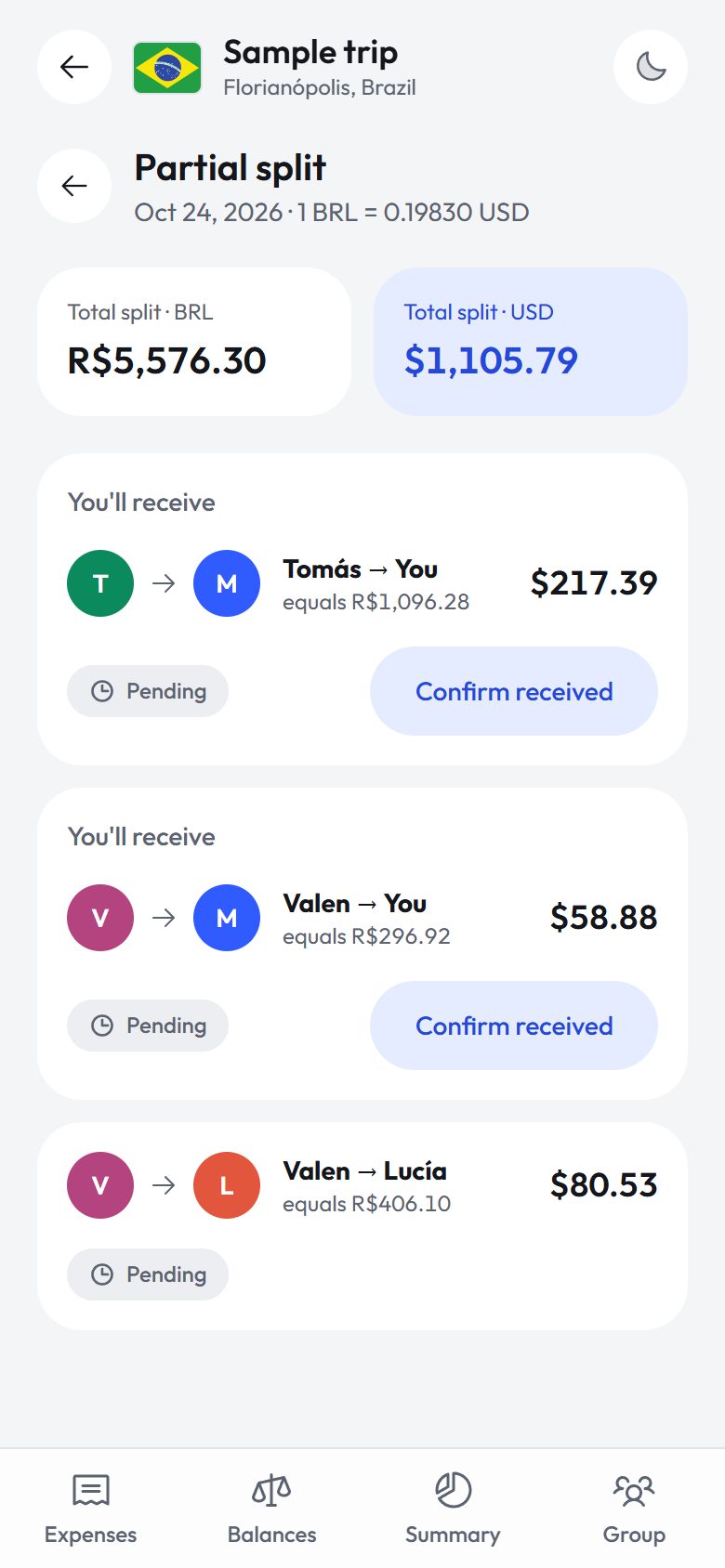
When the person receiving confirms each transfer, the matter is closed for both: nobody wonders whether it arrived, and nobody has to post screenshots in the group chat.
Tricky situations
The friend who never pays
If it's a pattern, raise it privately and without blame: "I've noticed closing the accounts is hard for you, is everything OK? Would you rather we organize it differently?" Sometimes there's a money problem behind it, and it's better to know.
The friend who earns much more
They may offer to cover things, but it shouldn't become the norm: whoever earns less can end up feeling indebted. An alternative is picking plans everyone can afford and leaving extras to whoever wants them.
The old debt nobody mentions
If months have passed, "I'd forgotten about this, shall we close it?" beats staying silent. Offering a long deadline keeps it from sounding like a demand.
Joining the group without an account
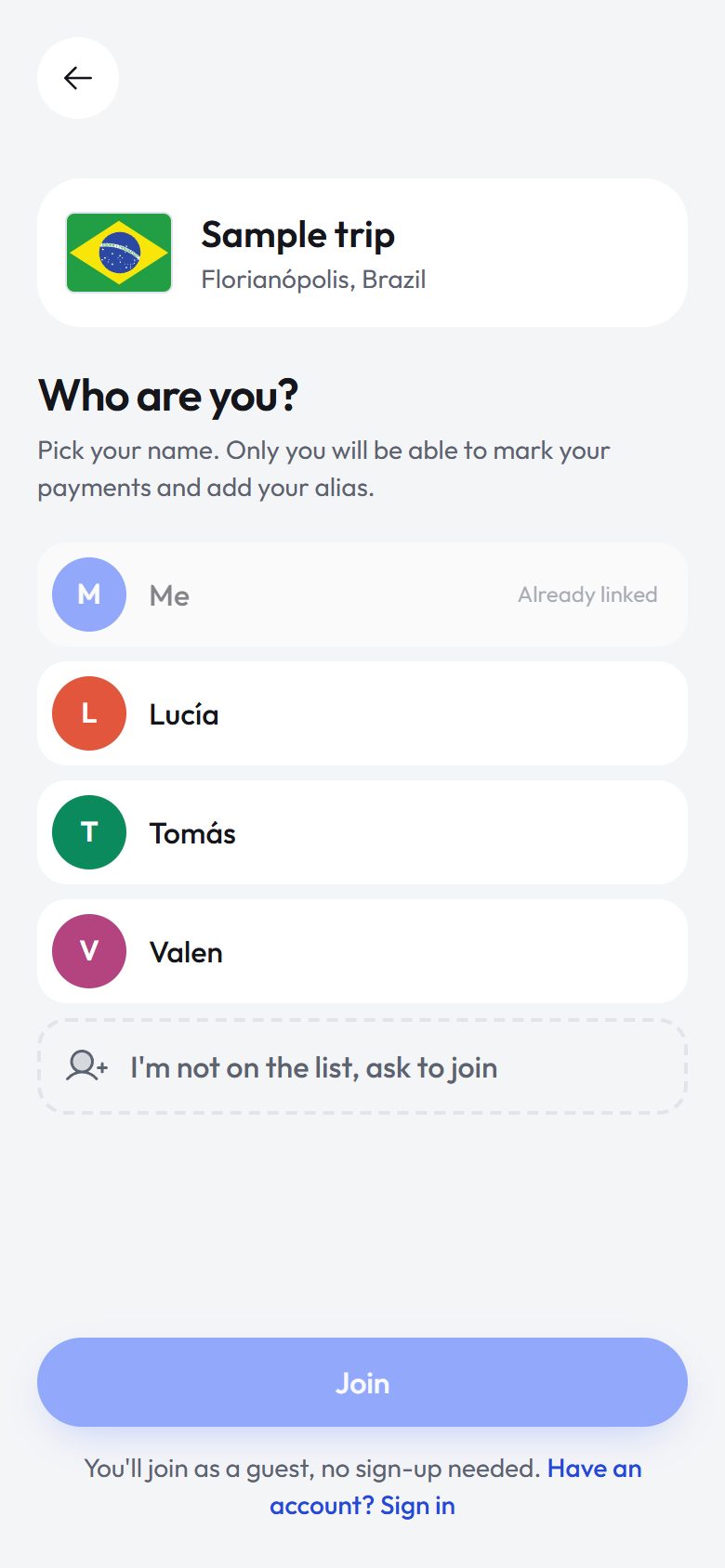
A common barrier is that not everyone wants another app. In TribuSplit each friend joins with the trip code, picks their name from the list, and that's it: they can see the expenses, add their payment details and mark their payments without signing up.
In short: agree before spending, keep a record everyone can see, ask clearly and kindly, set a deadline and confirm payments. Friendships appreciate the clarity.