 TribuSplit
How to split travel expenses with friends without arguing
Group trips are cheaper and more fun, right up until it's time to settle up. A simple method means nobody overpays and nobody is left owing.
The problem isn't money, it's missing records
On a trip, one person rarely pays for everything. Someone books the rental on their card, someone else rents the car, one person does the big grocery run and another covers the boat tour. Three days in there are a dozen crossed payments, and by the end of the week nobody remembers who paid what.
The arguments are rarely about bad faith. They happen because everyone has a different picture of how much they put in, and without a shared record there's no way to check. The person who fronted a lot feels they always pay; the person who fronted little feels overcharged.
The fix has three parts: log everything as it happens, split each expense only among the people who took part, and settle at the end with as few payments as possible. The rest of this guide walks through each step with a real example.
1. Agree on the rules before you leave
Five minutes of conversation before the trip saves hours of arguing afterwards. You don't need a contract, just for everyone to hear the same thing:
- What everyone shares: lodging, shared transport, fuel, tolls, groceries.
- What each person pays alone: personal shopping, souvenirs, individual treats.
- How restaurant meals are split: evenly, or everyone pays their own if orders vary a lot.
- Which currency you'll use to pay each other back if you travel abroad, and at what rate.
- When you'll settle: at the end, or every few days on a long trip.
If someone doesn't drink, or is skipping an expensive activity, now is the time to say it. Rules are far easier to agree on when nobody owes anything yet.
2. Log every expense right away
The golden rule is to record each expense as soon as it's paid, with four details: amount, who paid, who it's split between, and a category. Leave it for the evening and receipts get lost; leave it for the last day and memory starts inventing.
Nobody needs to be the group accountant. Anyone should be able to log an expense, including on behalf of someone whose phone is dead: "Tom paid for parking, I'll add it."
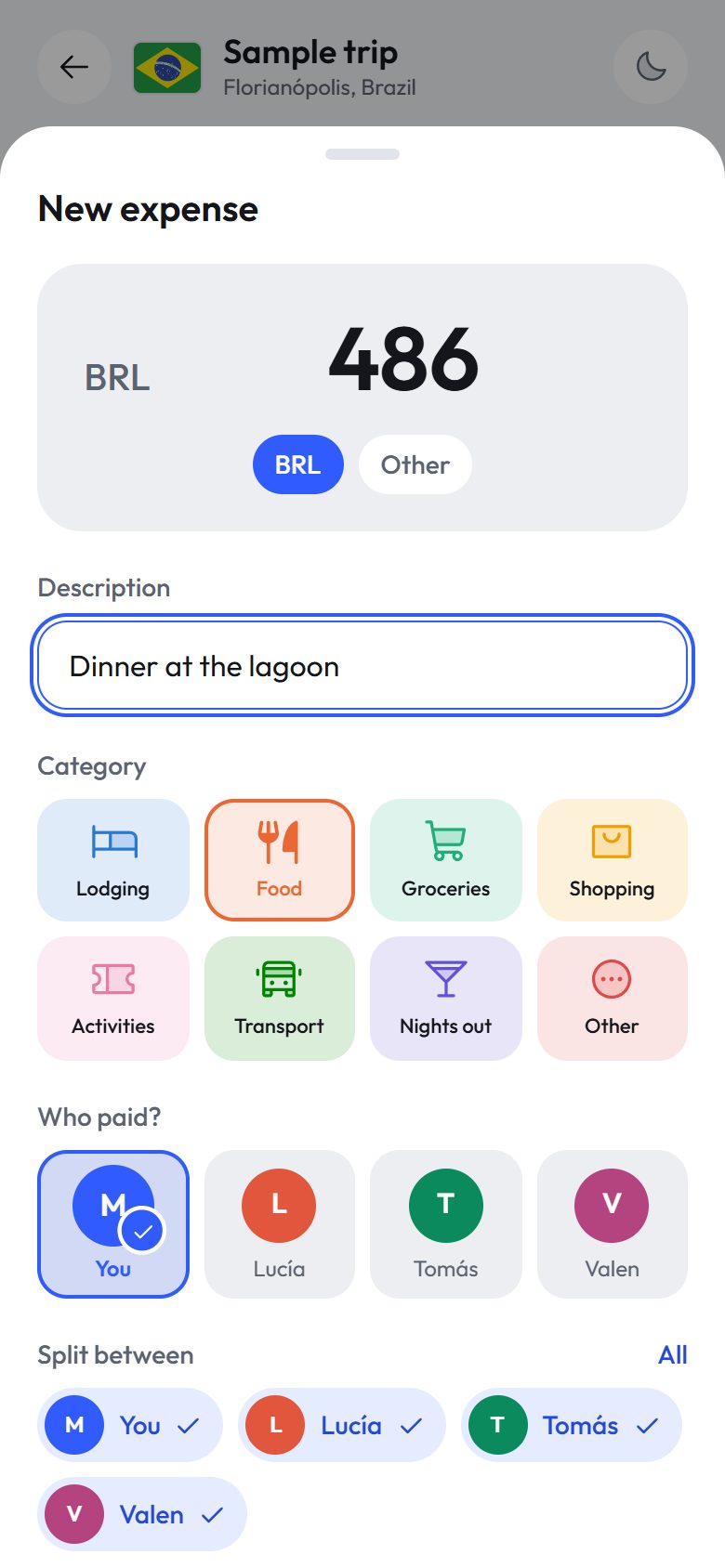
In TribuSplit, expenses default to the destination's currency. If someone paid in another currency (a tour charged in US dollars in Brazil, say), you tap "Other", pick the currency, and the app converts it at that day's rate, which you can adjust.
3. Split only among the people who took part
Splitting everything evenly sounds fair but often isn't. If someone skipped the tour, they shouldn't pay for it. Each expense should be split only among the people who actually used it.
An example with four friends on a week at the beach:
| Expense | Paid by | Split between | Each |
|---|---|---|---|
| Rental house 1,200 | Ana | All 4 | 300 |
| Car and fuel 480 | Ben | All 4 | 120 |
| Boat tour 270 | Cara | Ana, Ben, Cara | 90 |
| Groceries 200 | Dan | All 4 | 50 |
| Birthday dinner 360 | Ana | Ben, Cara, Dan (treating Ana) | 120 |
Look at the last row: Ana paid for dinner, but it was her birthday, so the other three are treating her. It's split among them and Ana pays nothing for it. Situations like this are impossible to reconstruct from memory and trivial if you log them on the spot.
4. Work out each person's balance
With a complete record, each person's balance is a subtraction: what they paid minus their share.
| Person | Paid | Share | Balance |
|---|---|---|---|
| Ana | 1,560 | 300 + 120 + 90 + 50 = 560 | +1,000 |
| Ben | 480 | 300 + 120 + 90 + 50 + 120 = 680 | −200 |
| Cara | 270 | 680 | −410 |
| Dan | 200 | 300 + 120 + 50 + 120 = 590 | −390 |
The balances add up to zero: what some owe is exactly what others are owed. If yours don't, an expense is missing or split wrong.
If every expense was shared by everyone, the split expenses calculator does this in a minute: enter what each person paid and it tells you who pays whom.
5. On long trips, settle in stages
On trips longer than a week, it's worth settling partway through. Nobody builds up a large debt, and whoever fronted a lot (usually the person who booked the lodging) gets paid back sooner.
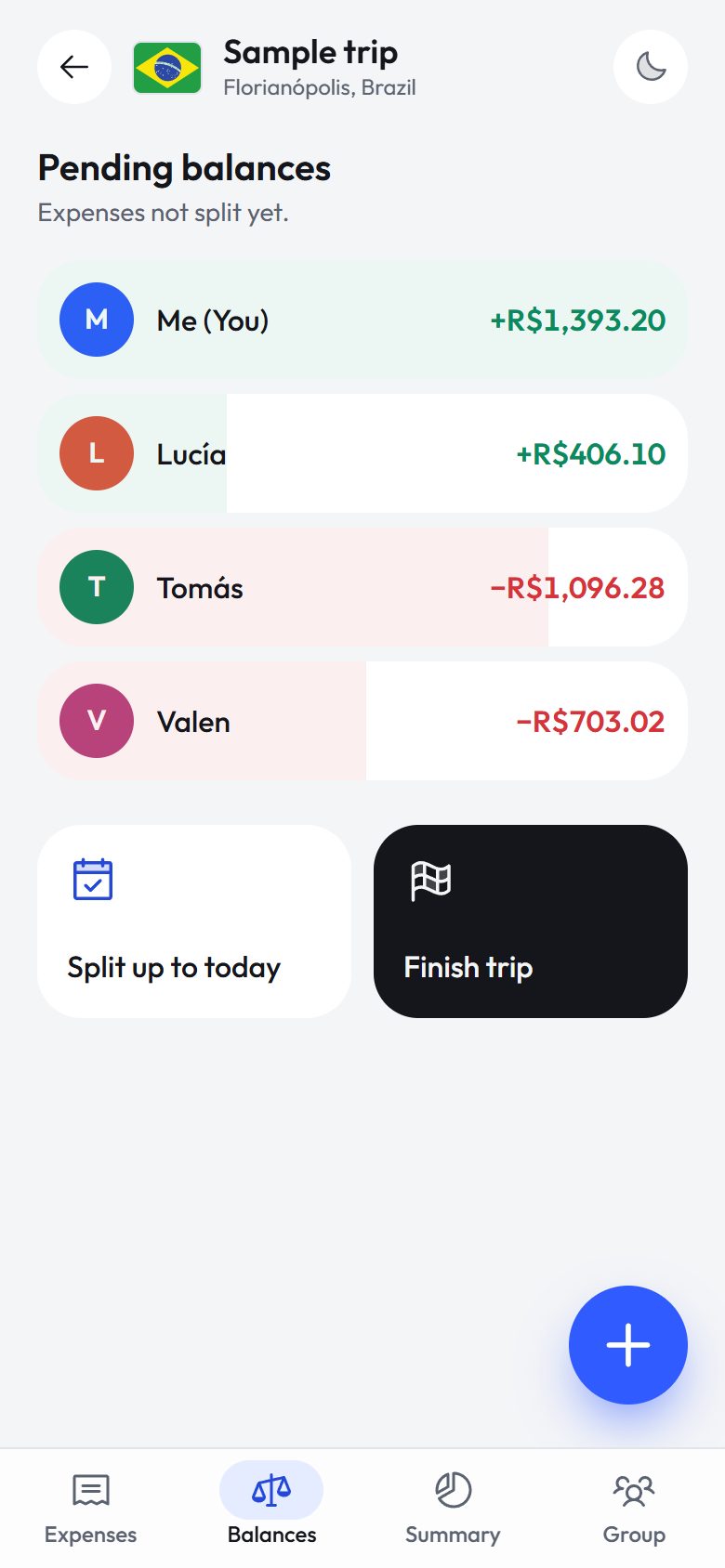
The key is that expenses already settled don't count again in the final split, though they still show in the trip summary. In TribuSplit that's the "Split up to today" button: it takes everything pending, works out the payments and marks those expenses as settled.
6. Settle with as few transfers as possible
If everyone paid back each person for each expense, the example above would need at least six transfers. It doesn't have to: debtors can pay creditors directly.
- Cara pays Ana 410.
- Dan pays Ana 390.
- Ben pays Ana 200.
Three transfers and everyone is at zero. In a group of N people you never need more than N − 1 payments. The method is explained step by step in how to settle group debts with the fewest transfers.
7. Confirm every payment
A small habit that prevents a lot of confusion: when someone sends money, the person receiving it confirms it arrived. That way it's clear which debts are settled and which are still open, without checking bank statements or posting screenshots in the group chat.
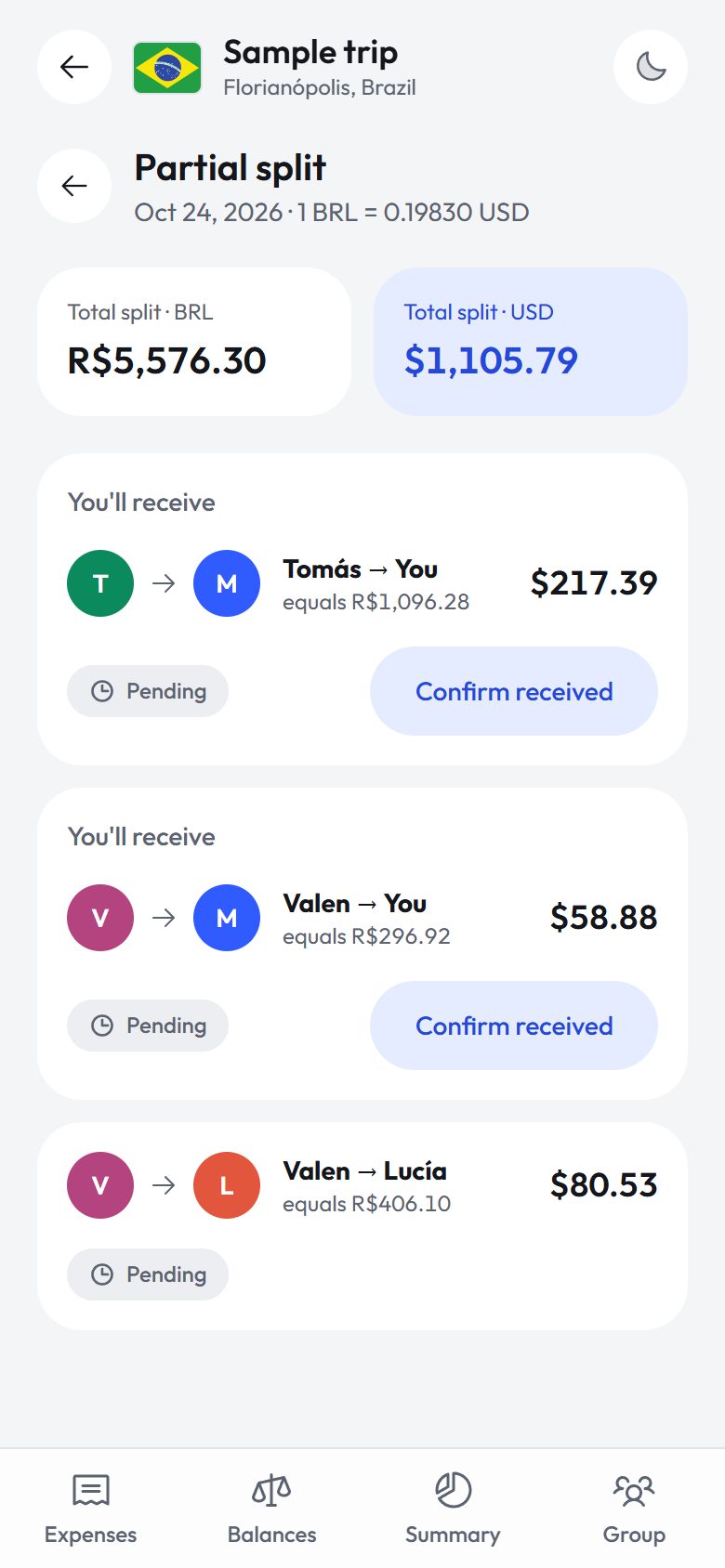
In the app, only the person who owes can tap "I paid", and only the person being paid can confirm it was received. Everyone adds their own payment details, so nobody sends money to the wrong account.
Common mistakes
- Logging everything at the end. Something always gets forgotten, and it's usually a small expense from whoever complains least.
- Splitting everything among everyone. People who skipped an activity end up paying for it and feel taken advantage of.
- Rounding by eye. Across dozens of expenses, rounding adds up. Let the math close to the cent.
- Mixing currencies without converting. Adding reais to dollars gives a meaningless number. See how to handle travel expenses in multiple currencies.
- Waiting weeks to settle. Old debts are the ones that end badly.
FAQ
Does everyone need the app?
No. Whoever creates the trip adds everyone's names, and anyone can log expenses on someone else's behalf. People who want to mark their own payments or add their payment details join with the trip code, no account needed.
What about expenses paid before the trip?
Flights and lodging deposits are often paid weeks ahead. Log them with their real date; they show up grouped under "Before the trip" and count in the split like any other expense.
What if someone leaves early?
Do a partial split on the day they leave. They're settled with everyone, and later expenses are split only among those still traveling.
In short: clear rules before you leave, every expense logged when it happens, splits only among those who took part, few transfers at the end and every payment confirmed. That's how money stops being the topic of the trip.