 TribuSplit
How to plan a group trip budget
A good budget isn't a guess. It separates what you already know from what you need to estimate, and leaves room for the unexpected.
Why a group needs a budget
Traveling alone, a budget is a personal choice. In a group, it's an agreement. If each person imagines a different trip (one pictures hostels and supermarket meals, another a hotel with breakfast and dinners out), problems start on day one. Building the budget together puts those expectations on the table before anyone books.
It doesn't need accountant-level precision. A rough per-person number, broken into parts everyone understands, is enough.
1. Separate fixed and variable costs
Fixed costs are known before you leave: flights, lodging, car rental, insurance, pre-booked tours. Variable costs depend on each day: meals, local transport, nights out, shopping.
Add up the fixed costs and divide by the number of people. Estimate the variable ones per person, per day. Mixing them is the most common mistake: lodging doesn't depend on how often you eat out, and dinners don't depend on what the lodging cost.
2. Estimate daily spending per person
Picture a typical day on the trip and estimate:
- Food: breakfast, lunch, dinner and snacks. Cooking a few meals at your rental lowers this a lot.
- Local transport: taxis, ride-hailing, public transport, fuel, parking, tolls. For a road trip, the gas money calculator estimates fuel per person.
- Activities: tickets, equipment rentals, tips.
- Going out: bars, cafés, treats.
Multiply that daily figure by the number of days. If you don't know the destination, look up supermarket and restaurant prices on travel forums and review sites to calibrate. A useful trick: estimate three levels (tight, normal, comfortable) and choose one together.
3. Add a buffer for surprises
Something always comes up: an unplanned tour, a late-night taxi, a pharmacy run, a rainy day that changes every plan. A buffer of 10 to 15 % on top of the total is usually enough for short trips. For long trips or destinations with volatile prices, add a little more.
4. Agree on a spending level
This is the delicate part. If one person wants a nice restaurant every night and another prefers to cook, the same budget won't work for both. Options that work:
- Agree on a shared "base" level and let anything extra be paid individually.
- Mix it up: some meals at the rental, some meals out.
- Split each activity only among the people who join, instead of splitting everything among everyone.
What doesn't work is "we'll figure it out there": on the trip, nobody wants to be the one who says something is too expensive.
Worked example: one week, four people
| Item | Group total | Per person |
|---|---|---|
| Lodging, 6 nights | 1,200 | 300 |
| Car and fuel | 480 | 120 |
| Daily spending (40 per person × 6 days) | 960 | 240 |
| Buffer (12 %) | 317 | 79 |
| Total | 2,957 | 739 |
Example figures in any currency: what matters is the structure. With this table, everyone knows to set aside about 740 for the trip, and that about 420 of it goes before departure (lodging and car).
5. Don't forget pre-trip costs
Deposits, flights and tickets are paid weeks ahead, usually on one person's card. Log them as soon as they're paid, with their real date: they're part of the trip and belong in the split. In TribuSplit they're grouped under "Before the trip" and don't count toward the daily average.
6. Track spending during the trip
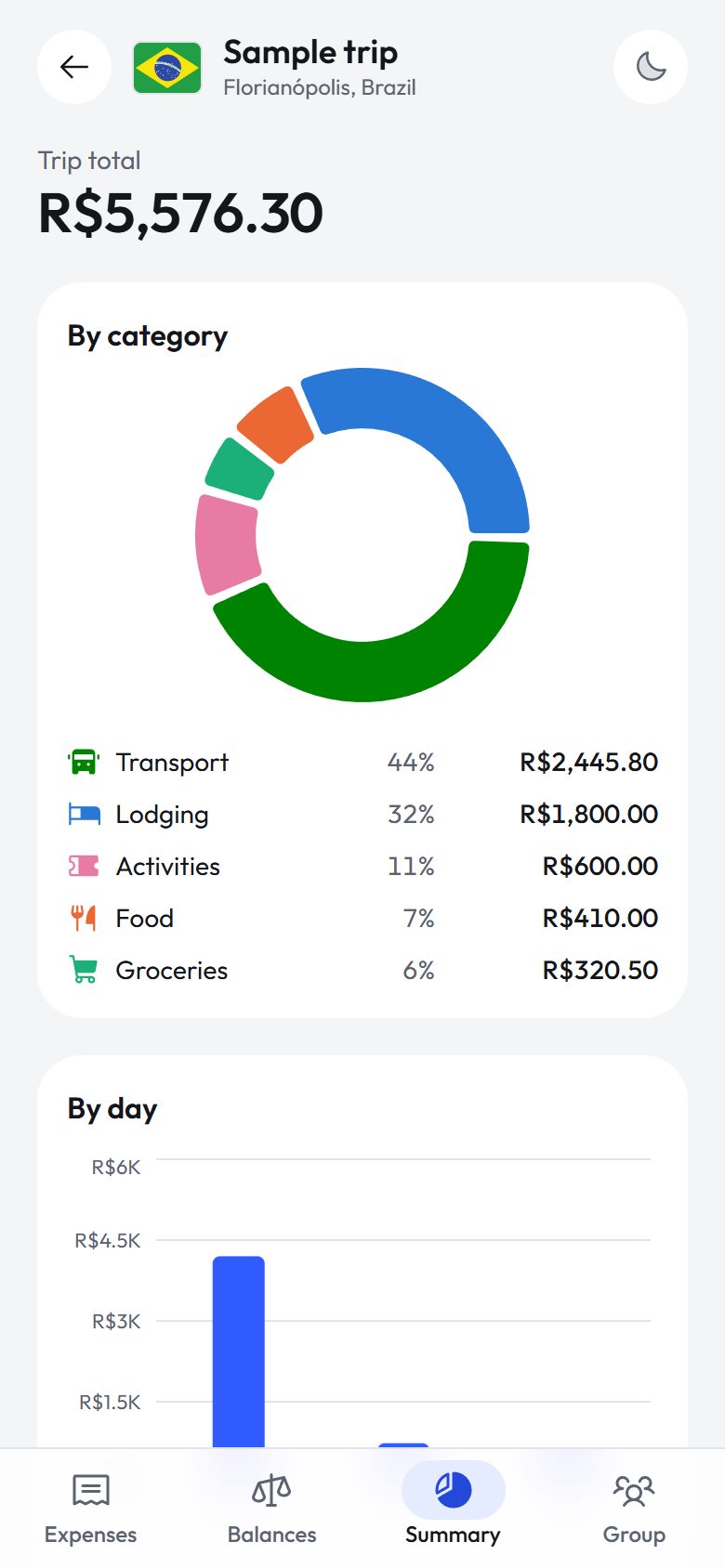
A budget only helps if you compare it with reality. Logging every expense in a shared app lets everyone see, at any moment, the total spent, by category and by day.
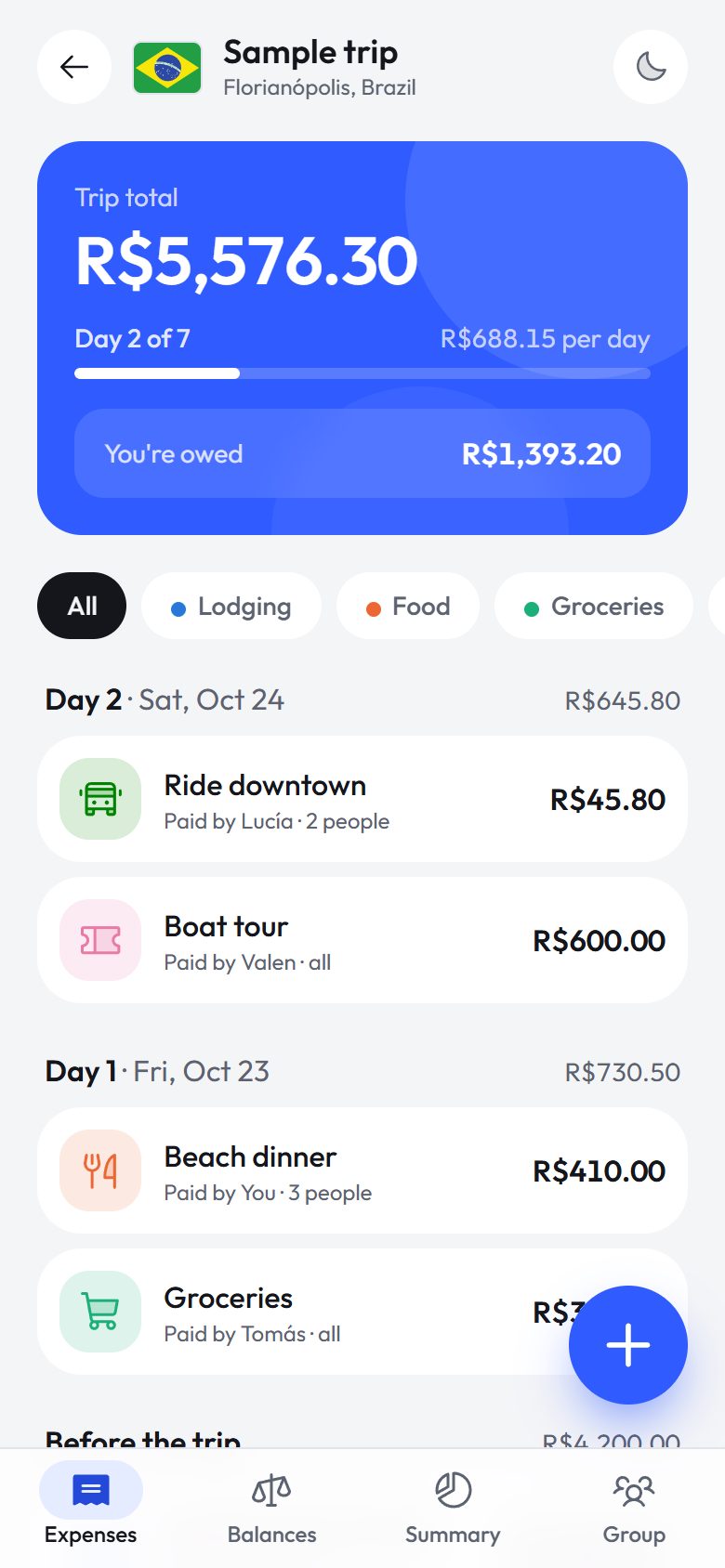
If food spending is running well over plan halfway through, there's still time to adjust: a dinner at home, a beach day instead of a tour. Finding out when you get home doesn't help.
Common mistakes
- Budgeting only for lodging and flights. On short trips, daily spending can match or exceed fixed costs.
- Using old prices. Look for recent information; in some destinations prices change fast.
- Ignoring exchange rates and card fees abroad. See paying abroad without hidden fees.
- Leaving no buffer. An exact budget breaks at the first surprise.