 TribuSplit
Group travel insurance: what to check before you buy
Travel insurance is one of those things nobody wants to use and everyone is glad to have. In a group there's an extra decision: does everyone buy their own, or does one person cover everybody?
Why it matters more than people think
Most people assume their health coverage at home goes with them. Often it doesn't, or only partly. In the US, Medicare generally doesn't cover care abroad, and many private plans cover little outside their network. In the UK, the GHIC card gives access to state healthcare in EU countries, but it isn't travel insurance: it doesn't cover private treatment, repatriation or cancellations.
A private emergency visit, a hospital stay or a medical flight home can cost far more than insuring the whole group. And on a group trip, one person's emergency affects everyone's plans.
Group policy or individual policies?
Both work. The trade-offs:
| One group policy | Individual policies | |
|---|---|---|
| Price | Some insurers discount groups or families | Each person pays for their own profile |
| Minimum size | Some insurers require a minimum number of travelers | None |
| Fit | Same cover for everyone | Each picks cover for their age, health and activities |
| Admin | One purchase, one contact | Everyone handles their own |
| Splitting the cost | One person pays and it's shared | Nothing to split |
A common middle ground: one policy for the people who want the same basic cover, and individual upgrades for anyone with specific needs (a pre-existing condition, diving, skiing).
What to check in any policy
- Medical limit: the maximum paid per person and per incident. Is it enough for a hospital stay at your destination?
- Emergency evacuation and repatriation: often the most expensive item, and the one people forget to check.
- Direct billing or reimbursement: does the insurer pay the hospital, or do you pay first and claim later?
- Pre-existing conditions: excluded, covered with a declaration, or covered for an extra premium?
- Activities: hiking above a certain altitude, scuba, surfing, skiing and riding scooters are common exclusions.
- Trip cancellation and interruption: what counts as a covered reason, and how much of the prepaid trip is refunded.
- Baggage and delays: limits per item and in total.
- Deductible (excess): what you pay before the insurer pays anything.
- Age limits: some policies cost more or cover less above certain ages.
Read the exclusions as carefully as the coverage. That's where two policies that look the same turn out to be different.
The group-specific question: what if one person cancels?
On a group trip, costs are shared. If one person drops out a week before, the rental house still costs the same, now split among fewer people. Check two things:
- Does the policy refund that person's share of non-refundable costs if they cancel for a covered reason?
- Does anyone else's cover change if the trip changes because of one person (for example, if everyone has to come home early)?
Talk about it before booking: who absorbs the cost if someone cancels for a reason the insurance doesn't cover? Agreeing in advance avoids an awkward conversation later. More ideas in how to talk about money with friends.
Splitting the cost of a shared policy
If one person buys cover for everyone, log it like any other trip expense, split among the people insured. It's settled with everything else at the end.
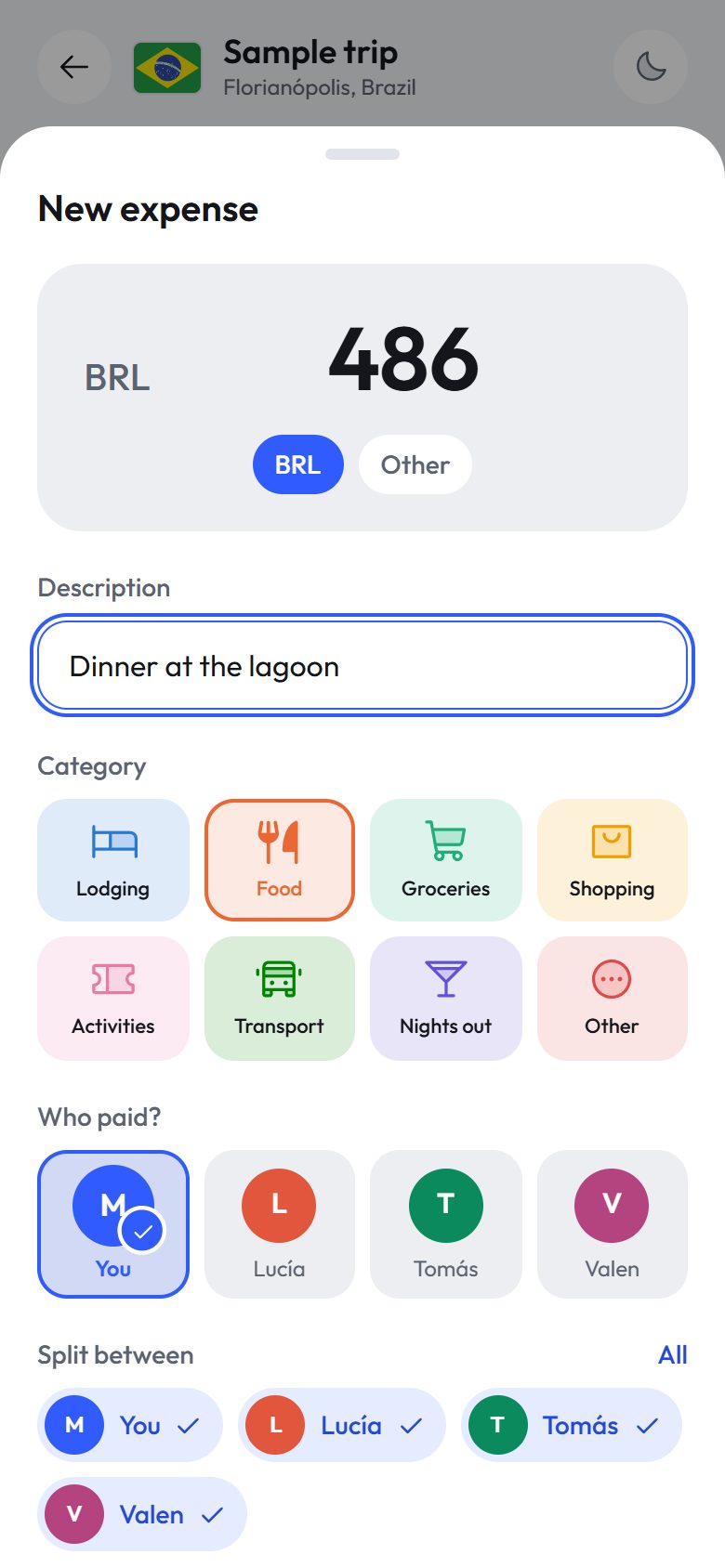
If some people chose extra cover, split the base policy among everyone and have each person pay their own upgrade.
Budgeting for it
Price depends on trip length, destination, ages and cover, so there's no universal number. Get two or three quotes for the same dates and add the chosen one to the trip's fixed costs per person, just like lodging. See how to plan a group trip budget.
Before you leave
- Save the policy PDF and the emergency number on your phone.
- Share everyone's insurer contact details in the group chat.
- If your credit card includes travel cover, check the limits and conditions; many require the trip to be paid with that card.
- If someone has a medical condition, make sure at least one other person in the group knows.
FAQ
Is credit card travel insurance enough?
Sometimes. Card cover often has lower limits and activation conditions. Compare it against the checklist above.
What should I do if I need to use it?
Call the insurer's assistance line before going to a clinic, unless it's a serious emergency: many policies only cover care they arrange or approve. Keep every receipt.